
Agentforce gave patients conflicting balances. The cause was the data.
National Health Services Provider · Agentforce Deployment · Data Quality Audit · Sharing Model Redesign
Composite case drawn from Jeremy Carmona's Salesforce engagements. Details are combined and anonymized.
Key Takeaways
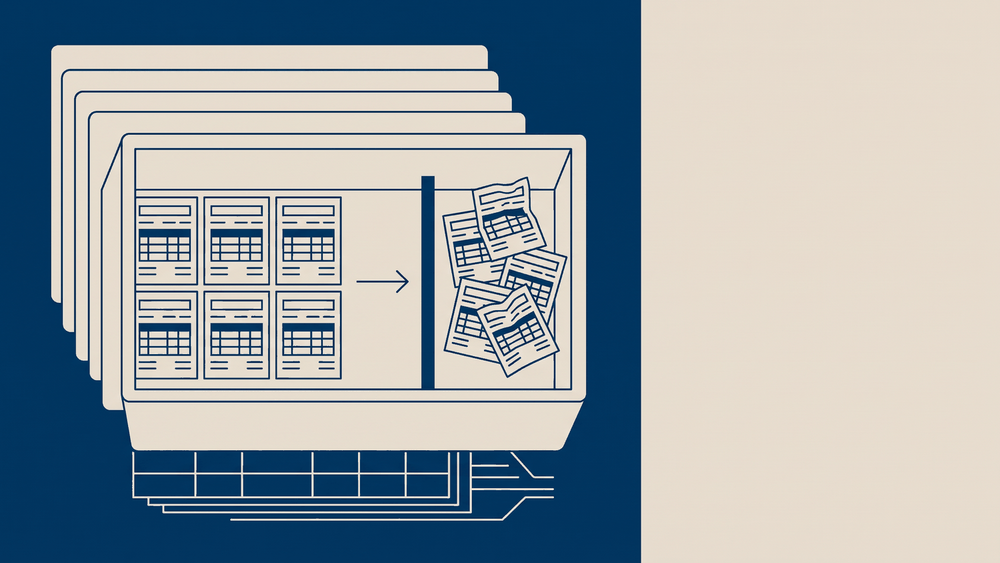
A national health services provider deployed Agentforce without a data quality review or a sharing model audit. The AI gave patients two different account balances by pulling from duplicate records, and the organization switched it off. A readiness assessment found a large set of duplicate Account records, some tied to active patient cases. The root cause was not an AI configuration error. It was a data quality problem that existed before AI was turned on. After cleanup and a governance framework, Agentforce went back into production with tighter data and access controls.
At a Glance
Industry: Healthcare (National Health Services Provider)
Platform: Salesforce with Agentforce (AI)
Scope: AI readiness assessment, data quality audit, sharing model redesign, and governance framework
Starting Point: Agentforce disabled after patients received conflicting balances
Duplicate Records: A large set found, some tied to active patient cases
Root Cause: Data quality issues and missing field-level security, not AI configuration
Outcome: Redeployed with clean data, scoped access, and quarterly governance reviews
The Situation
A national health services provider deployed Salesforce Agentforce across their patient services team. The goal was to speed up case resolution by giving AI agents access to patient account data, case history, and billing records.
The deployment skipped two steps: a data quality review and a sharing model audit. Nobody checked whether the underlying data was clean enough for AI to use. Nobody checked whether the sharing rules would give the AI agent access to the right records at the right time.
The result: the AI agent gave patients two different account balances depending on which human agent had handled the original case. One balance came from the primary Account record. The other came from a duplicate Account that had been created during a previous data migration. The AI treated both as valid.
The organization disabled Agentforce after two weeks, writing off the implementation fees and weeks of internal staff time. The root cause was not an AI configuration error. It was a data quality problem that existed before AI was ever turned on.
What Jeremy Did
Jeremy ran the AI Readiness Scorecard across five categories: Data Quality, Governance Readiness, Automation Maturity, AI Preparedness, and Documentation Health. The organization scored low overall, and Governance Readiness was the weakest category.
SOQL queries identified a large set of duplicate Account records, some with active patient cases attached. The AI had been pulling data from whichever record it found first. Jeremy built deduplication rules and executed a controlled merge with business user validation at each step.
The existing sharing model had no field-level security on PHI fields. The AI agent had the same data access as a system administrator. Jeremy redesigned the role hierarchy and built permission sets aligned to the organization's documented privacy requirements. The AI agent now sees only the fields it needs for case resolution.
Jeremy built a governance framework with quarterly review cycles, clear field ownership assignments, and human oversight checkpoints for every AI-generated response. The framework included a documentation package for the board and leadership review: what AI can do, what it cannot do, and who is responsible when it does something unexpected.
Agentforce was redeployed with clean data and proper access controls.
The relaunch included additional data quality and access controls. The governance framework now runs quarterly, catching data quality issues before they reach production, and the organization's AI Readiness Score improved after remediation.
Before and After
| Metric | Before | After |
|---|---|---|
| AI Readiness Score | Low | Improved after remediation |
| Duplicate Account records | Undetected | Identified and merged |
| Duplicates with active patient cases | Present | Resolved with business user validation |
| Patient billing accuracy | Two different balances per patient | One balance from the merged record |
| PHI field-level security | AI had system administrator access | Permission sets aligned to documented privacy requirements |
| Governance framework | None | Quarterly reviews, field ownership, human oversight |
| AI deployment status | Disabled after 2 weeks | Running in production |
Jeremy Carmona, founder of Clear Concise Consulting, published "How Salesforce Admins Can Apply Data Governance to Einstein" in Salesforce Ben. It covers the data governance principles behind this kind of work.
Ready to see what CCC can do for your org?
Take the Scorecard to see where you stand, or request a scoping call to discuss your project.