
Salesforce GovCloud Implementation: What Changes Before the First Login
A Salesforce GovCloud implementation starts failing in the demo phase, months before anyone logs in. The pattern I keep seeing in government contracting work: someone watches a commercial-org demo, the AI features look great, procurement signs, and then the team discovers that half of what they saw lives outside their authorization boundary. Nobody lied. The demo org and the government org are different products wearing the same logo.
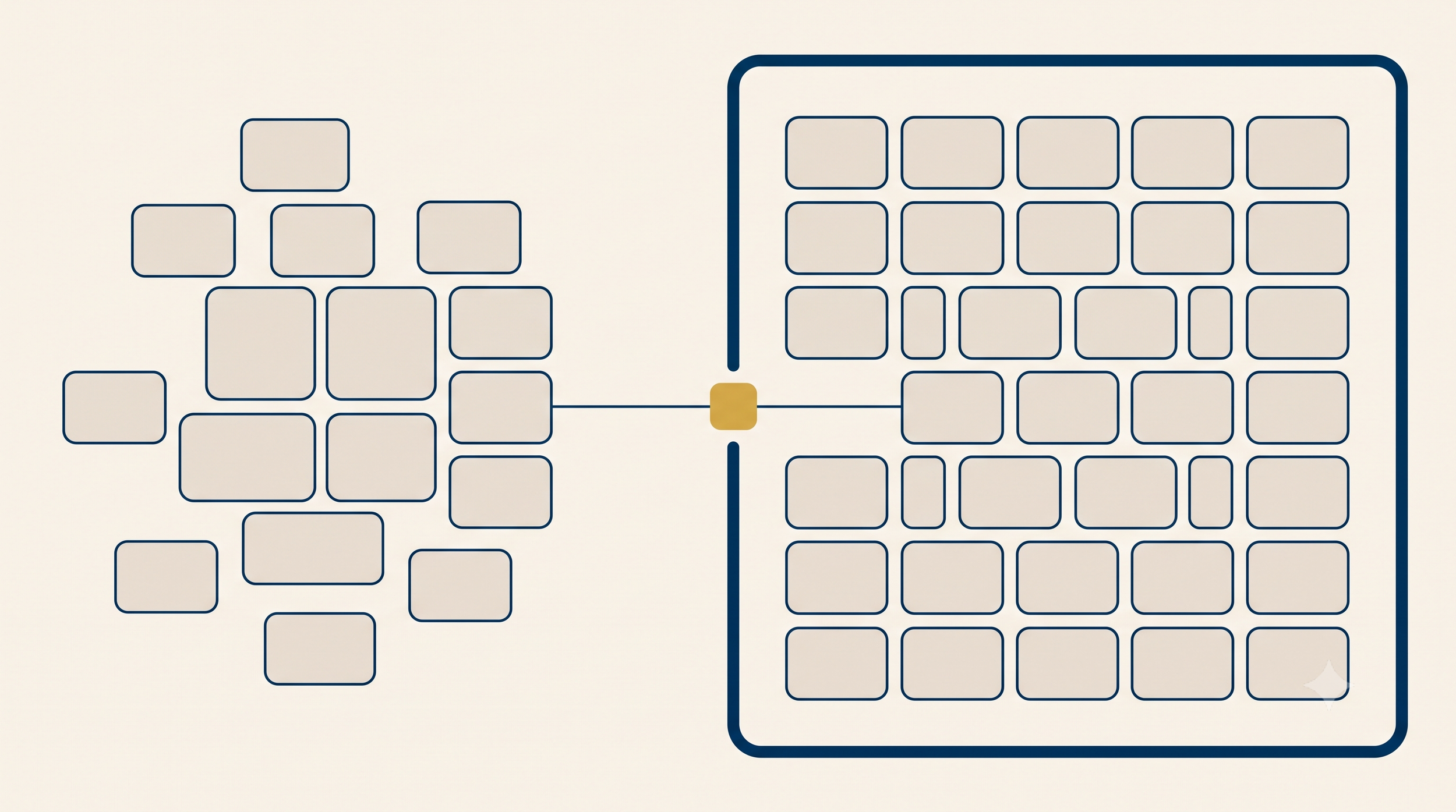
Commercial Salesforce implementations are scoping exercises. GovCloud implementations are boundary exercises, and the boundary decision has to come first, in writing, before licensing, before design, before anyone builds a Flow.
Why GovCloud projects stall
The root causes are structural, and they show up regardless of agency or contractor size.
The authorization boundary is not the product catalog. Salesforce publishes which products and features are authorized at which level, and the list moves. Features can even appear in Einstein Studio and Prompt Builder before US government approval, a warning Salesforce prints in its own documentation, so seeing a model in the UI does not mean you are cleared to turn it on.
Procurement works differently. Government Cloud Plus pricing runs as an annual contract calculated as a percentage of applicable Salesforce product spend hosted in the dedicated instance. Teams that budget from commercial per-seat math get a surprise at the quote stage.
The AppExchange assumption breaks. Third-party apps are not automatically inside Salesforce's authorization boundary. Every managed package needs its own compliance review, and the app your commercial-org admin swears by may have no government story at all.
Staffing is a compliance control. Orgs handling ITAR-adjacent Controlled Unclassified Information carry personnel restrictions that a typical implementation partner bench does not meet. Ask about US persons requirements before you ask about velocity.
How to diagnose which boundary you actually need
Match the data classification to the tier before anyone opens Setup. Per Salesforce's Government Cloud documentation:
| Tier | Supports | Typical fit |
|---|---|---|
| Government Cloud Plus | FedRAMP High (JAB P-ATO), DoD IL2 | Federal civilian agencies, state and local, most contractors handling CUI |
| Government Cloud Plus - Defense | DoD IL4 and IL5 | DoD mission owners and contractors handling high-sensitivity CUI and U-NSI |
| Top Secret environment | Top Secret authorization | Classified workloads, by conversation with Salesforce |
Three diagnostic questions settle most cases. What is the highest impact level of data that will touch the org? Who is the mission owner, and does a DoD contract require IL5 handling? Which compliance frameworks bind you: FedRAMP alone, or CMMC Level 2 or 3 for CUI under NIST 800-171? Salesforce's position is that Government Cloud supports CMMC Level 2 and 3 requirements, and the current authorization status of any given product lives in the "Government Cloud Available Products and Features" knowledge article. Read it the week you scope, and read it again the week you sign, since the list changes between Salesforce's three annual releases.
Defense-tier note that surprises people in week one: Government Cloud Plus - Defense requires the Common Access Card as the MFA token and runs on salesforce.mil domains behind the DISA Boundary Cloud Access Point. Your login flow, your SSO design, and your integration endpoints all inherit that.
How to sequence the implementation
Write the boundary memo. One page: data classification, chosen tier, and the named products with their authorization status as of a dated snapshot. This memo is what saves you when a stakeholder asks for a feature in month four.
Run procurement against the tier, not the demo. Annual contract, percentage-of-spend model, and confirmation in writing of which SKUs land inside the dedicated instance.
Provision and baseline. Standard Setup work applies, with government-specific checks: confirm org domain behavior, MFA policy (CAC for Defense), and release preview settings so authorization-pending features stay off.
Gate every AppExchange install. Intake form per package: vendor compliance attestation, data flow diagram, and a yes or no from whoever owns the boundary memo. No attestation, no install.
Treat AI features as a second boundary review. Agentforce in Government Cloud Plus is FedRAMP High authorized, with Azure OpenAI Service for the US government as the model provider, and only specific capabilities on the authorized list. The Einstein Trust Layer still applies inside GovCloud, but the model menu is shorter than commercial and the approval status is per-feature. Verify each one against Salesforce's current documentation before enabling, then document who approved it. The AI governance questions list works as the checklist here.
Integrate inside the boundary. Every external system in the diagram gets classified the same way the org did. A FedRAMP High org synced nightly to an unauthorized reporting tool is not a FedRAMP High system. It is a diagram with a hole in it.
How to keep the org compliant after go-live
Governance in GovCloud is mostly calendar discipline. Review the authorized products article every release cycle, because features move in and out of scope and "it appeared in the UI" is not an authorization. Re-run the AppExchange gate whenever a vendor ships a major version. Keep the boundary memo versioned, with a named owner, so the org's compliance story is one document instead of an archaeology project. Log every AI feature activation with the authorization evidence attached, since that is the exact artifact an assessor asks for and the exact artifact nobody can find two years later.
The 15-minute version
CCC works the Salesforce and AI governance side of government contracting engagements: boundary decisions, feature authorization reviews, and the documentation assessors actually want. If you are scoping a GovCloud implementation, or you inherited one mid-flight, book a 15-minute call. No pitch. Just the boundary questions answered.